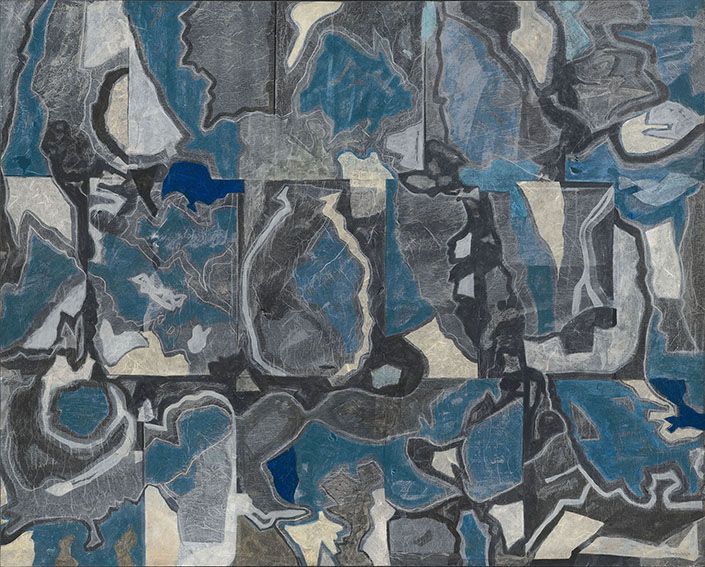
The exhibition took place at the Benaki Museum in 2025. The events of the epic are not treated as historical occurrences to be illustrated but are transformed into painterly events unfolding within the autonomous space of the artworks. What emerges on the painted surface is not the epic itself, but new situations. These narratives move away from an anthropocentric perspective and instead foreground locations — real or imagined — along with the surrounding theoretical inquiries, placing them at the center of the painting procedure.
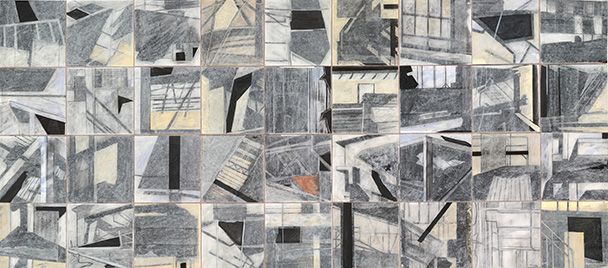
The Urban Trace series explores the haunting beauty of ruins and derelict industrial sites, large-scale works on paper with acrylic, charcoal and pastel that chart the tension between memory and decay. Piraeus Group Cultural Foundation, during 2018.
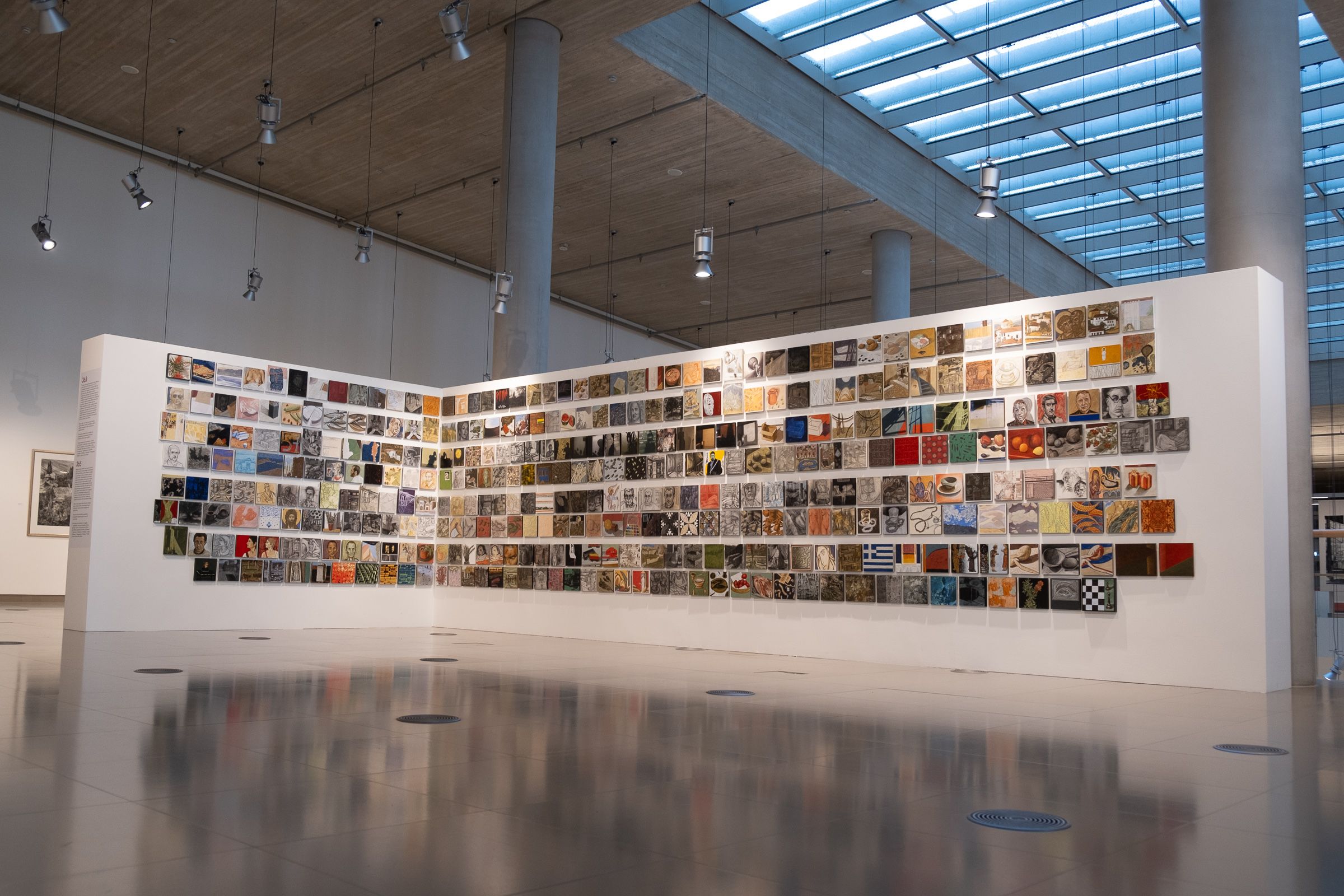
A retrospective featuring works from the period 1990–2020 was held at the National Library of Greece in 2023 and at the Teloglion Foundation of Arts of Thessaloniki in 2024. A corresponding catalogue was published. Painting, printmaking, religious art, and books collaborate to unfold the personality of a versatile creator with an extensive range of production.
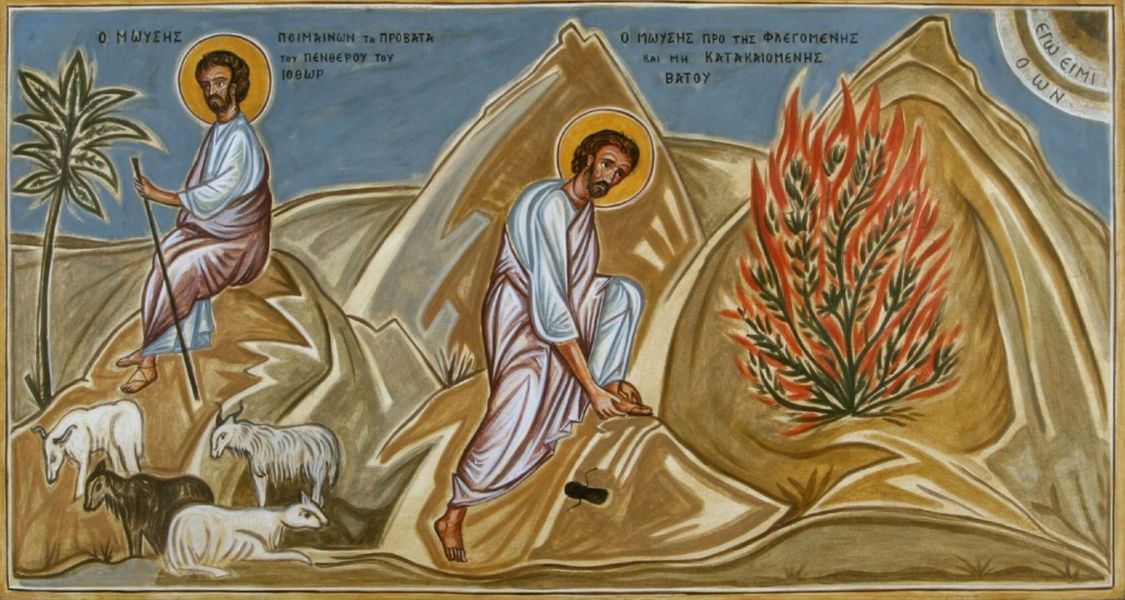
His engagement with Byzantine painting and his interest in the relationship between tradition and contemporary visual language led him into the field of ecclesiastical painting. He has created frescoes for the Monastery of Saint Catherine of Sinai, the monasteries of Vatopedi, Iviron, and Simonos Petra on Mount Athos, as well as for the Patriarchate of Alexandria, among others. His approach to painting for church spaces is not an imitation of old models, but rather an attempt at a personal reinterpretation. It is worth noting that he is among the innovators of our ecclesiastical painting: he stands firmly on centuries of tradition, yet he does not handle it imitatively, but rather composes a personal pictorial idiom, wrote the late Byzantine Museum director, D. Konstantios
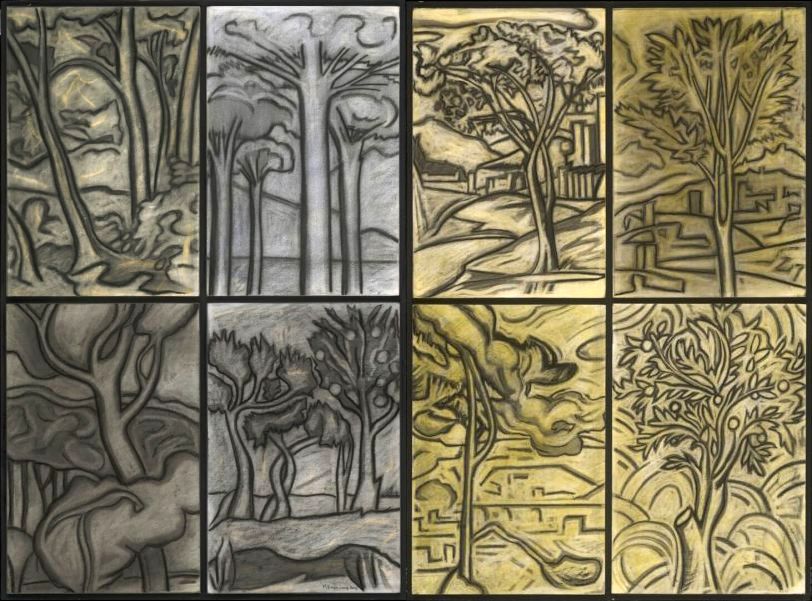
The history of art becomes the subject of painting. Using the tree as a point of reference—as it has been represented throughout history, from antiquity to the modern era and from East to West—relationships between different historical periods are revealed, as well as affinities between seemingly different aesthetic approaches. The manner of painting is what essentially determines the content of art, rather than the subject itself.